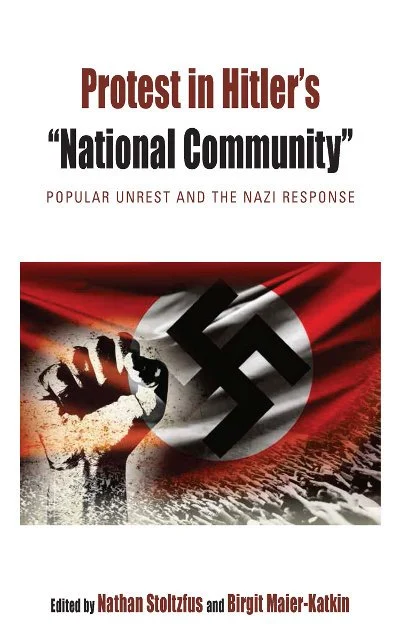
*This edited volume has been widely reviewed in academic journals and adopted in university courses.
This edited volume brings together original research on the many ways Germans expressed dissatisfaction, protest, and resistance within the framework of the Nazi “national community.” Through detailed case studies, the contributors examine conflicts over food supply, religious practice, racial policy, and wartime hardship, highlighting how ordinary people voiced grievances in public and semi-public ways.
Rather than treating dissent as marginal or exceptional, the volume shows that unrest was a recurring feature of Nazi society and a problem the regime took seriously. By analyzing how authorities tracked opinion, negotiated outcomes, and adjusted policy, the book sheds light on the dynamic relationship between dictatorship and society, and on the limits of total control.