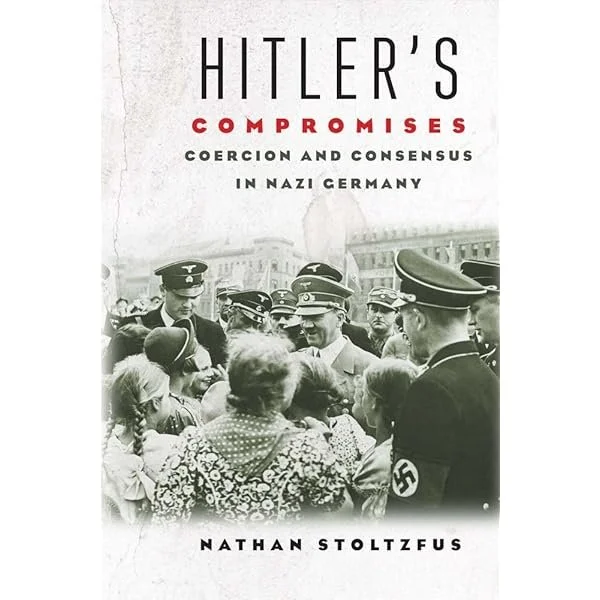
Hitler’s Compromises reconsiders how power functioned inside the Nazi dictatorship by closely examining moments when the regime adjusted its policies in response to public pressure. Drawing on a wide range of archival sources, Nathan Stoltzfus traces conflicts over religion, race, welfare, labor, and wartime conditions to show how Nazi leaders monitored public reactions and weighed the political costs of repression.
The book reveals a regime that was often pragmatic rather than monolithic, willing to retreat or modify policies when unrest threatened social stability. By foregrounding negotiation, accommodation, and social interaction, Stoltzfus offers a more nuanced account of authoritarian rule, one that helps explain how a system of extreme violence could coexist with everyday cooperation and compliance.